Interior painting trends in Norfolk prioritise earthy, biophilic palettes featuring deep forest greens, warm browns, and coastal indigos that mirror the local landscape. These styles blend moody blues and rich burgundy accents with statement ceilings to create sophisticated, lived-in environments. This shift toward grounded tones reflects a regional preference for rural chic aesthetics that harmonize with the natural scenery of Norfolk.
Many homeowners in Norfolk find themselves trapped between outdated, sterile minimalism and the desire to honour the historic bones of their properties. If your living spaces feel cold or disconnected from the local landscape, you are likely craving a more sophisticated, intentional palette. As we look towards 2027, the shift is moving decisively away from flat greys and toward textures that breathe colours that resonate with our coastal heritage. This guide explores the sophisticated return of earthy espresso tones and deep North Norfolk indigos. We will also examine the evolution of colour drenching into refined colour capping; additionally, we will discuss why breathable, biophilic finishes are essential for maintaining the integrity of your masonry. From architectural woodwork to meticulous preparation, here is how to master the next era of Norfolk interiors.
The Norfolk Shift: Why 2026 is the Year of Warmth and Heritage
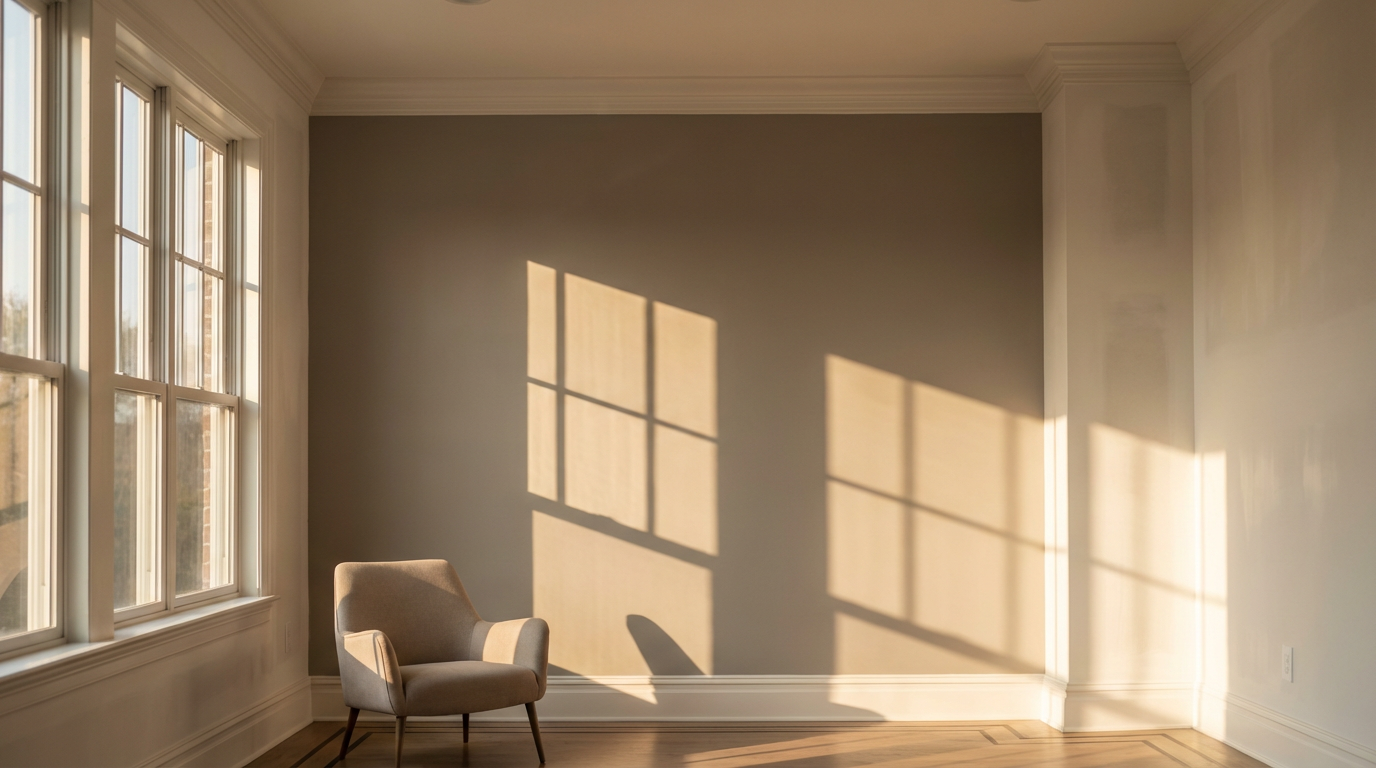
The sterile, monochromatic aesthetic often referred to as Millennial Grey is finally receding, making way for a significant move toward warmth and heritage. For homeowners looking at interior painting trends in 2026, the focus has pivoted toward creating spaces that feel authentic and established rather than clinically perfect. This shift is particularly evident along the North Norfolk coast, from Hunstanton to Cromer, where the unique, often piercing coastal light can make cool greys feel flat or unwelcoming.
Instead of the showroom look, 2026 is about lived-in comfort. This involves using palettes that respond to Norfolk’s architectural history; think of the flint cottages in Blakeney or the Georgian townhouses of King’s Lynn. These properties demand a depth of colour that only warmer, earthier tones can provide. At Norfolk Plaster, we believe that the success of these rich, heritage-inspired palettes depends entirely on the substrate. A flawless professional painting and decorating services project cannot exist without a high-quality plaster finish. If the underlying surface is uneven, the nuanced shadows of these new warmer tones will only highlight imperfections. Achieving this year’s look requires a seamless transition from a crisp, level plaster skim to the final pigment, ensuring the walls reflect light with the intended softness.
Earthy Tones and the Return of Rich Espresso
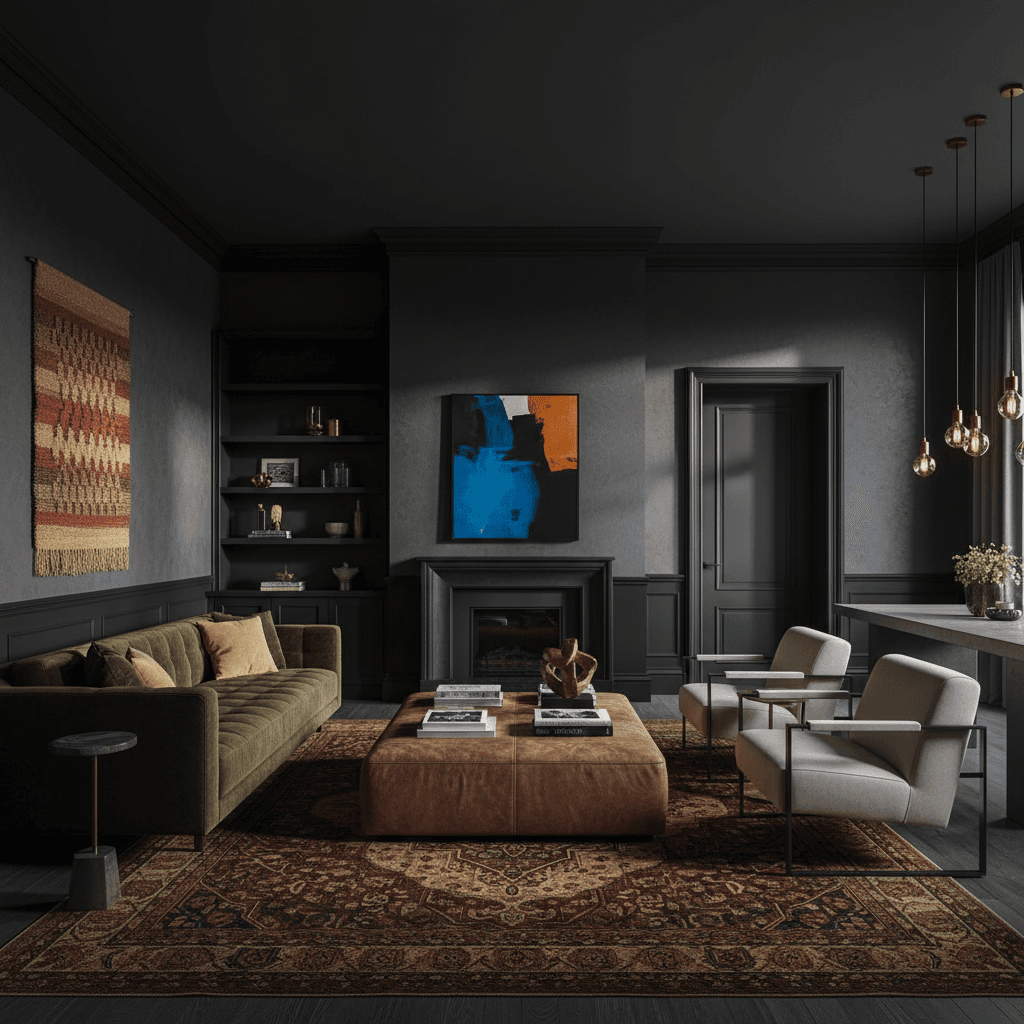
The core of interior painting trends is defined by a sophisticated return to deep, grounded earth tones. We are seeing a move toward rich espresso, dark chocolate, and charcoal infused browns, such as Benjamin Moore’s Silhouette. Unlike the flat, muddy browns of previous decades, these modern iterations offer a refined, velvety finish that absorbs and reflects light in a complex way. This depth is achieved through high pigment density and, crucially, a perfectly prepared substrate.
In the historic market towns of King’s Lynn and Swaffham, these rich tones are particularly effective. They serve to bridge the gap between ancient architectural features and modern living. A deep espresso wall provides a striking backdrop for original oak timber beams or the cool, grey tones of a Norfolk pamment or stone floor. By using these darker pigments, homeowners can create a sense of enclosure and security that lighter shades often fail to provide in large, high ceilinged period rooms.
Colour Category | Example Shade | Best Paired With |
|---|---|---|
Rich Espresso | Silhouette | Exposed oak, brass hardware |
Deep Umber | Freckle | Pamment tiles, linen fabrics |
Charcoal Earth | Graphite | Yorkstone, industrial lighting |
Achieving this look requires more than just a brush and a tin of paint. These saturated colours are unforgiving; they will highlight every undulation or fat edge in an old plaster finish. Our professional painting and decorating services ensure that walls are meticulously prepared before these rich pigments are applied. For older properties, this often involves a fine surface skim to provide the level of smoothness necessary for a truly professional, velvet like result. The goal is to move away from the clinical and toward a space that feels curated and substantial.
Coastal Indigo and Boundless Blues: A North Norfolk Staple
The North Norfolk coast, from the salt marshes of Blakeney to the expansive beaches of Brancaster and Thornham, dictates its own unique palette. For 2026, the Boundless Blue trend is becoming a localized staple, moving away from the predictable coastal cottage tropes of the past. This evolution focuses on a spectrum that ranges from pale, misty sky tones to deep, moody indigos that mirror the North Sea during a winter swell.
This movement is often categorized under the Rural Chic aesthetic, which integrates these expansive blues with slate and charcoal accents. This combination adds a layer of sophisticated weight to traditional flint properties. In sun drenched coastal rooms, the challenge is often preventing blue from feeling too clinical or cold. To achieve warmth, we recommend selecting blues with a slight red or violet undertone rather than a green one. Pairing these with natural wood finishes or textured surfaces helps to soften the aesthetic while maintaining a crisp, modern feel.
Blue Variant | Tone Characteristic | Best Application |
|---|---|---|
Boundless Blue | Expansive, mid-tone, airy | High-ceilinged living rooms |
Deep Indigo | Saturated, dramatic, velvet-like | Dining rooms and study spaces |
Coastal Slate | Cool, charcoal-infused, structural | Trim, cabinetry, and feature beams |
When applying these deeper indigos, the quality of the finish is paramount. Darker blues are notorious for showing flashing or uneven absorption if the plaster substrate is patchy or over-absorbent in areas. Our professional painting and decorating services often begin with a rigorous assessment of the wall's porosity. In many heritage homes across the coast, we find that a fresh skim of plaster is the only way to ensure these high-pigment blues lay flat and consistent. For those seeking expert decorators in Holt or the surrounding coastal villages, achieving this look within the broader interior painting trends Norfolk 2026 requires a blend of technical precision and an understanding of how the shifting coastal light interacts with saturated colour.
Colour Capping: The 2026 Evolution of Colour Drenching
Moving inward from the moody indigos of the coast, the way we apply these pigments is undergoing a technical shift. Colour Capping has emerged as the sophisticated successor to the Colour Drenching movement that dominated previous years. While drenching involves saturating every surface in a single identical shade, capping utilizes tonal harmony. This technique involves selecting a primary hue for the walls and applying a related shade from the same colour family, often with a subtle shift in pigment density or finish, to the ceiling and upper cornicing.
This evolution provides a more structured feel than the total immersion of drenching. It creates an architectural frame that adds height and volume, contrasting sharply with the older 50:50 technique that split walls horizontally. Whereas the 50:50 method often visually shortened a room, capping maintains a continuous vertical flow. Within the interior painting trends Norfolk 2026, this approach is particularly effective in the high-ceilinged Victorian terraces of Norwich or the converted barns of Fakenham, where it can soften the transition between massive wall areas and the roofline.
From a technical standpoint, the success of colour capping depends entirely on the precision of the substrate. When two closely related tones meet at a junction, the eye becomes hypersensitive to the line. Any undulation in the skim coat or a rounded corner will cause the shadows to break, ruining the illusion of a crisp architectural "cap." Our professional painting and decorating services prioritize the integrity of the plaster before a drop of paint is applied. For these nuanced tonal shifts to work, the wall-to-ceiling transition must be perfectly sharp, requiring a level of skimming expertise that ensures light reflects evenly across the different pigments.
Biophilic Greens and Breathable Finishes
The evolution toward biophilic design is more than a stylistic choice for 2026; it is a practical response to Norfolk’s rural landscape. Woodland Green and muted Olive tones are taking centre stage, offering a visual connection to the marshes and forests that define our region. Within the scope of interior painting trends Norfolk 2026, these greens work best when they are not just seen, but also felt through the texture of the wall.
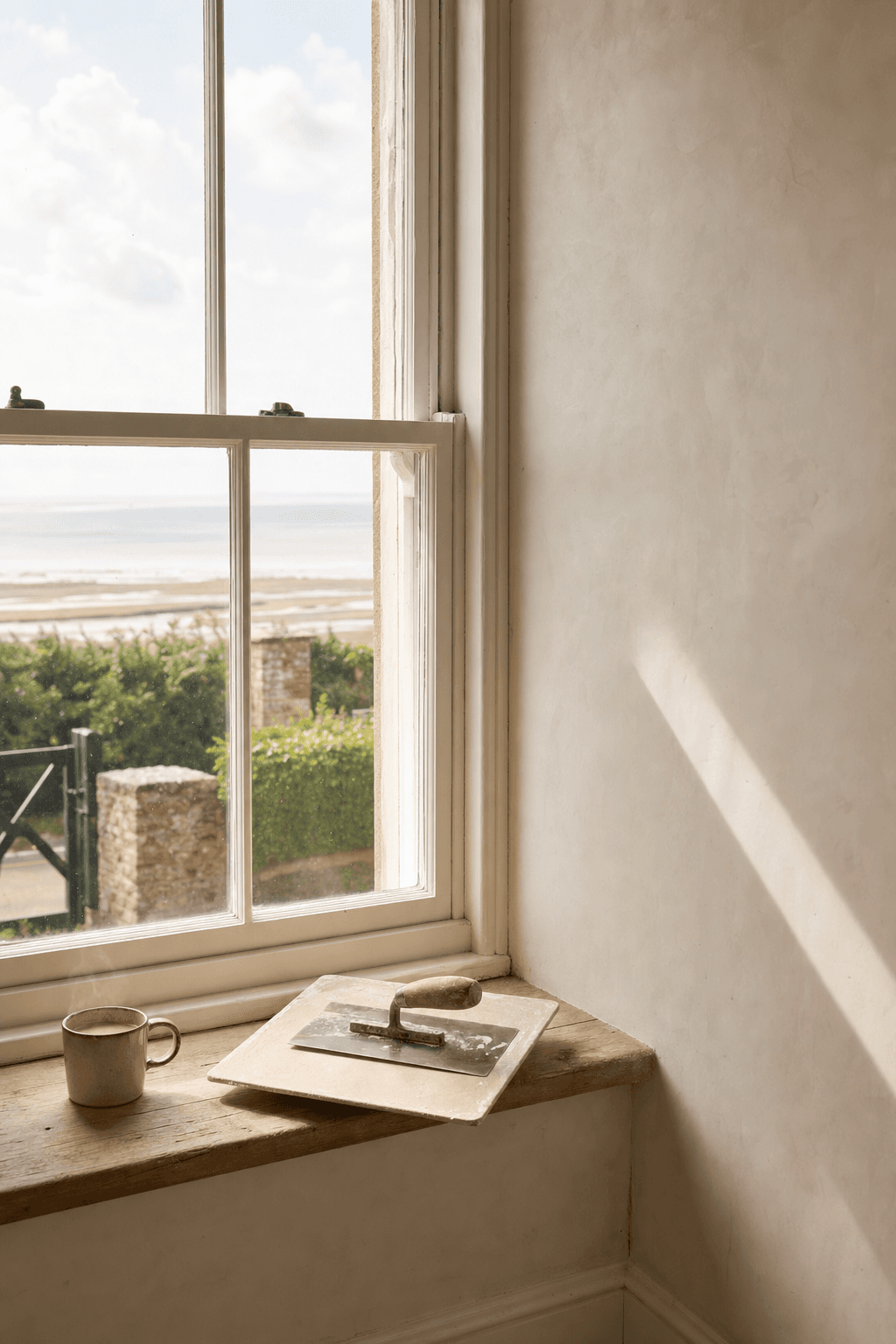
For the flint cottages and heritage properties common in areas like Blakeney or Cley, the choice of paint is a matter of structural health. These older buildings were designed to breathe, and using modern, plastic based emulsions can trap moisture, leading to damp and blown plaster. We recommend using breathable finishes for period properties to ensure longevity. Our professional painting and decorating services include expertise in applying lime plaster, providing the perfect, porous substrate for clay based or lime washes. These eco friendly paints offer a soft, matte depth that standard paints cannot replicate.
Paint Type | Breathability Level | Best Use Case |
|---|---|---|
Clay-based Paint | High | Soft, earthy greens in bedrooms |
Silicate Paint | Very High | Damp-prone flint or stone walls |
Traditional Limewash | Maximum | Historic timber-framed cottages |
When providing Burnham Market painting services or acting as expert decorators in Holt, we often steer clients toward mineral based pigments. They provide a sophisticated, chalky finish that aligns with the biophilic movement while actively protecting the architectural integrity of the home.
Replacing White Woodwork with Architectural Detail
As the focus shifts toward textured, breathable wall surfaces, the traditional reliance on brilliant white gloss for woodwork is rapidly fading. For interior painting trends Norfolk 2026, skirting boards, architraves, and doors are no longer treated as afterthoughts but as essential architectural elements. Homeowners are increasingly opting for bold contrasts or sophisticated tonal matching to redefine the proportions of their rooms.
In the Victorian terraces of Norwich, where features like picture rails and high skirting are prevalent, using colour to highlight these details adds a layer of structural depth. A popular combination emerging for 2026 involves applying a deep burgundy, such as Graham & Brown’s Divine Damson, to the trim against a warm, clay-toned neutral wall. This creates a grounded, heritage feel that white paint often disrupts. For a more contemporary approach, using a slightly darker version of the wall colour on the woodwork provides a refined, seamless transition that makes a space feel larger and more cohesive.
Design Approach | Effect | Recommended Combination |
|---|---|---|
High Contrast | Frames the room dramatically | Burgundy trim on parchment walls |
Tonal Woodwork | Softens architectural lines | Deep olive trim on pale sage walls |
Total Immersion | Modern and sculptural | Espresso trim on espresso walls |
Executing these sharp colour transitions requires absolute precision where the timber meets the plaster. Our professional painting and decorating services ensure that all woodwork is meticulously sanded and primed to take these high-pigment finishes. For those requiring expert decorators in Holt or bespoke Burnham Market painting services, we focus on achieving the crisp, clean lines necessary to make these architectural details stand out. The final result should be a deliberate design choice that elevates the entire room's aesthetic.
Preparing Your Walls for 2026 Trends
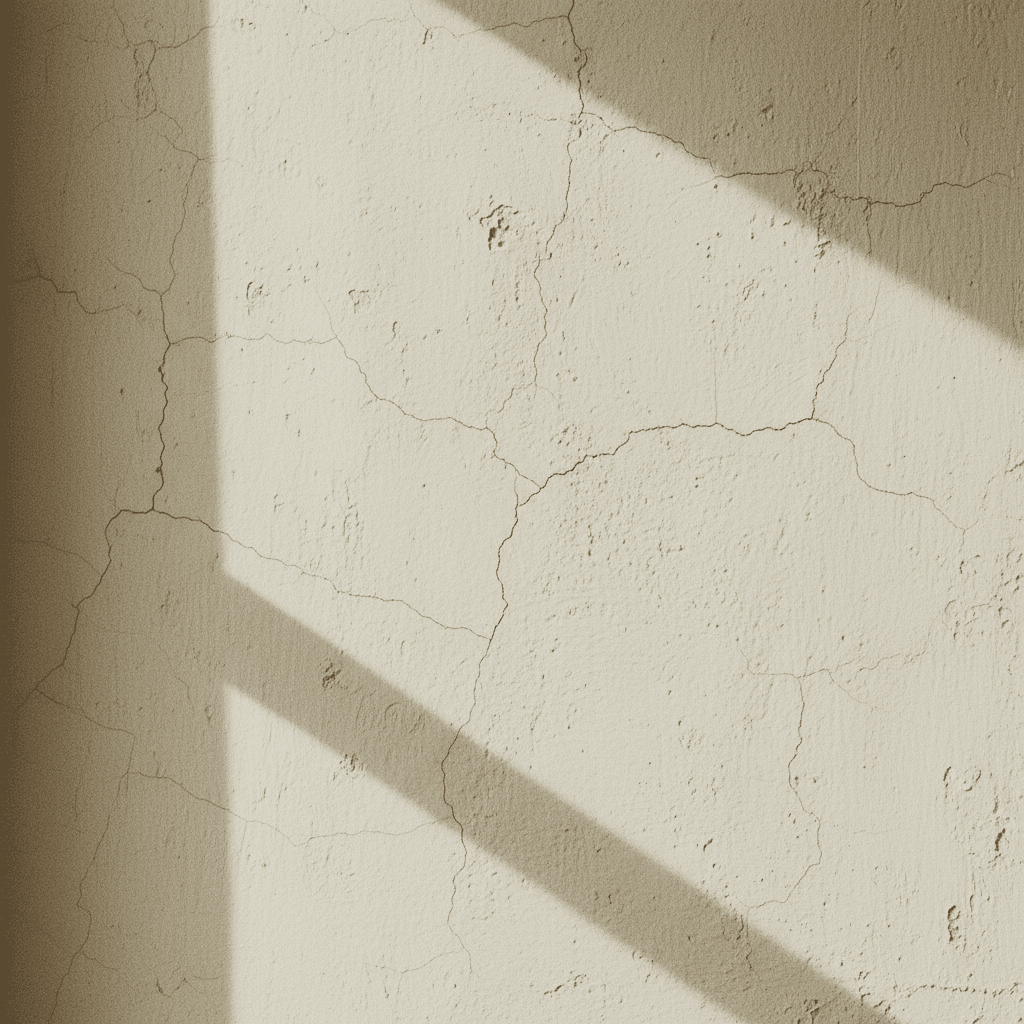
Achieving that elevated aesthetic depends entirely on the condition of the substrate. As interior painting trends Norfolk 2026 embrace deep espresso, saturated burgundy, and moody indigos, the margin for error on your walls disappears. These dark, high-pigment finishes are unforgiving, revealing every trowel mark, pit, or patch of uneven texture. For properties across the region, a professional skim coat is often the only way to ensure a flawless result.
Our dual expertise allows us to provide professional painting and decorating services that start with structural integrity. By replastering or fine-skimming before applying these 2026 palettes, we eliminate imperfections that standard sanding cannot hide. This integrated approach is why homeowners seek expert decorators in Holt or Burnham Market painting services who understand that a high-fashion finish is only as good as the plaster beneath it.
As we look toward the 2027 interior trends, it is clear that Norfolk homes are embracing a unique blend of traditional textures and bold, modern palettes. Finding the right balance between these styles can transform any living space into a contemporary sanctuary. If you want expert help to bring these artistic visions to life, our team is ready to assist. You can browse our full range of Services to see how we can support your next renovation project. We focus on quality finishes that ensure your home stays stylish for years to come.